
Artificial intelligence has already demonstrated that it can outperform humans in domains defined by clear rules, specific objectives and reliable feedback. However, these controlled environments are not always replicated in biology where “standard rules” do not always apply. Biological systems are inherently dynamic and so the outcome of any intervention relies heavily on context, making it difficult for models to generalize across biological settings.
For example, we cannot study an individual gene without understanding the system it operates in. Genes interact continuously with proteins, metabolites, cells, tissues, the microbiome and wider ecosystem. They are further influenced by behavior, age, disease state and the passage of time. Consequently, one biological signal can mean completely different things in various contexts. This same perturbation can result in vastly different outcomes across various individuals or conditions.
Because of this complexity, AI-driven biological discovery requires far more than pattern recognition or text analysis. While AI can identify correlations and propose ideas, without the proper foundation, it cannot reliably close the crucial loop between hypothesis, validation and refinement.
The Infrastructure Required for Discovery: The Nobel Turing Challenge
To bridge this gap, biology requires experimental infrastructure that yields high-quality, standardized, multi-layered data. This data must be generated in ways that can be seamlessly repeated, compared and fed back into predictive models.
The Nobel Turing Challenge, established by Professor Hiroaki Kitano at the Okinawa Institute of Science and Technology (OIST) and President of the Systems Biology Institute, serves as a central framework for what is needed. The challenge proposes that true autonomous scientific discovery requires three interconnected capabilities:
• High-precision simulations that are able to represent complex biological systems.
• AI that is capable of generating and evaluating hypotheses at scale.
• Automated experimental platforms capable of validating those predictions.
Without automated experimentation and high-quality biological data to fuel it, AI remains restricted to analysis and making suggestions.
MANTA Provides the Multi-Omics and Automation Layer
This is where the MANTA Project is critical. Jointly established in 2022 by CSB, Professor Kitano, and OIST, MANTA – an acronym for “Multi-omics Analysis Platform for Nobel Turing Challenge to develop AI scientists” – aims to address this fundamental infrastructure gap.
MANTA presents a concerted attempt to build the vital infrastructure required for AI-driven scientific discovery in biology, playing a specific role in connecting computational reasoning with experimental validation. The goal is not merely to generate larger volumes of data, but to create an iterative system in which AI actively participates in scientific reasoning.
MANTA points toward a transformation in biological discovery process, shifting it from a fragmented series of isolated hypotheses and experiments into a dynamic, iterative learning system. It begins by establishing a predictive baseline model of a biological system, which AI can leverage to reason and generate novel scientific questions. These hypotheses can then be tested through automated platforms to execute experiments, yielding rich, standardized multi-omics readouts. Rather than treating these results as static endpoints, MANTA feeds the validated data back into the model. This continuous refinement allows the system to learn from every outcome, informing more targeted hypotheses for the next cycle.
In this framework, large-scale multi-omics is not an endpoint in itself. It is the experimental substrate that allows biological models to be tested, updated, and made more predictive over time.
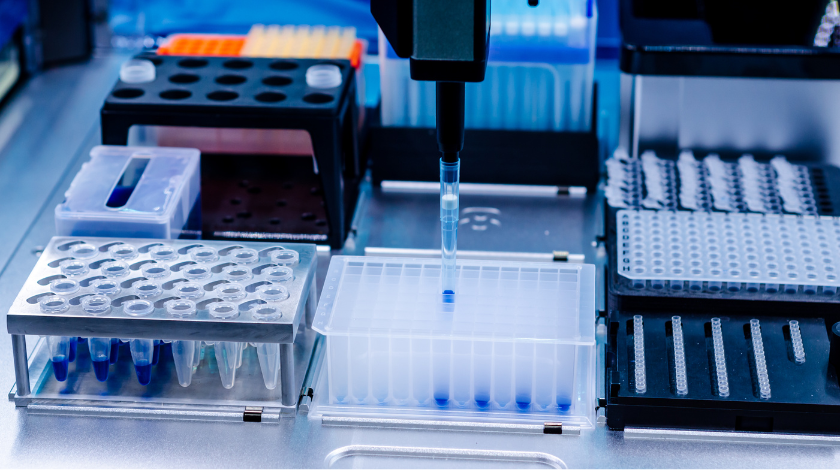
The project started by developing a fully automated comprehensive analysis system capable of powering large-scale human multi-omics research. This system enables scientists to generate and then test hundreds of new hypotheses, diving deeper into under-discovered genomes developing new theories about disease and its causes.
MANTA serves as a partner to help researchers overcome bias and broaden their research focus. It augments human curiosity by continuously exploring hypotheses, simulations, and experimental pathways at a scale that would be impossible for human researchers to achieve alone.
The Future of the AI Scientist
MANTA represents a shift that may change the structure, pace and scale of biological discovery itself. By acting as the underlying infrastructure for closed-loop, AI-driven research, MANTA could help scientists move beyond the limits of human intuition and attention. By empowering researchers to fully explore biological complexity, MANTA may help reveal biological patterns, obscure disease mechanisms, and hidden therapeutic opportunities that may otherwise remain undiscovered.