
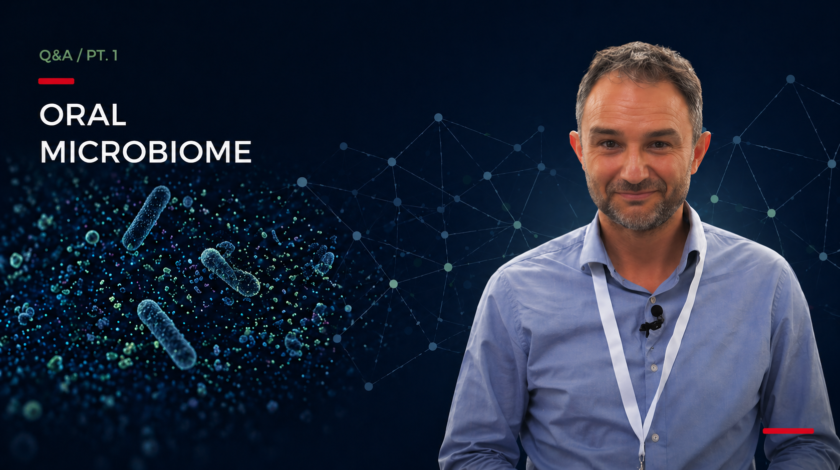
Alex Mira, PhD, is a senior researcher and Head of the Oral Microbiome Laboratory at the FISABIO Institute in Spain. CSB’s Henry Haiser spoke with Dr. Mira about the oral microbiome’s role in impacting both oral and systemic health. For informational purposes only; not medical advice.
HH: For readers who may be more familiar with the role of the gut microbiome in human health, what makes the oral microbiome so distinctive?
AM: The mouth is several habitats in one, a kind of microscopic Amazon rainforest. We find bacteria in the form of biofilms on the teeth, tongue, gingiva, cheeks, palate, and saliva, each of which provides different benefits.
We know a lot of the benefits of gut bacteria, including its production of short-chain fatty acids from fiber, which influences the vagus nerve and beta cells in the pancreas that release insulin.
Many of these benefits are also found in the oral microbiome, but it was generally thought that these compounds would be degraded in the stomach and therefore not have an effect. We now know this is not the case. Some microbial compounds are protected by salivary proteins, preventing degradation in the stomach, and others are directly absorbed in the oral cavity, similar to when we put a tablet below the tongue for fast systemic effects.
HH: Fascinating. How does the composition of our oral microbiome cause oral diseases, and what are the implications of this for the rest of our bodily systems?
AM: Oral microorganisms are responsible for the three main oral diseases: tooth decay (cavities), gum diseases (gingivitis and periodontitis), and halitosis (bad breath). They do this by producing acids, causing gingival inflammation, and releasing volatile compounds, respectively. However, our oral cavity is also inhabited by many beneficial microbes, and the balance between the good and bad ones is what matters.
For example, there are certain oral bacteria that can uniquely transform nitrates we ingest in vegetables, especially leafy greens and beets, into nitric oxide. This both kills oral pathogens and serves as an important signaling molecule and vasodilator, which lowers blood pressure and improves cardiometabolic health. This process happens when salivary glands interact with the vegetables, capturing the nitrate and mixing it with saliva, which is then recycled and enters the bloodstream. In controlled settings, we’ve seen how antiseptic mouthwash can sharply reduce nitrite production by removing the bacteria, causing a rise in blood pressure.
In different parts of the world, people with gum disease have both an increase in pathogens and a dramatic decrease in bacteria that reduce nitrate. This provides us with one of the main links between poor oral health and systemic conditions like high blood pressure, cardiovascular disease, and Type 2 diabetes.
HH: Beyond cardiometabolic health, what other systemic health impacts have you noticed?
AM: One of the major discoveries over the last decade is the impact of gum inflammation on preterm births. Gum pathogens can produce inflammatory molecules and allow LPS fragments, the molecules that provide structural integrity to bacteria, to enter into the bloodstream, triggering early delivery. Studies found that treating expectant mothers before the 26th week of pregnancy for gum inflammation can dramatically lower the preterm birth rate and also improve the weight of the baby.
In recent years, we found that measuring the levels of the oral bacterium Fusobacterium in fecal samples can indicate colon cancer and liver metastasis. At first, we thought these patients were just immunosuppressed, allowing the colonization of external bugs. But it kept showing up. These oral bacteria transform healthy cells into tumor cells. Surprisingly, if someone has a tumor, it will enter the cell, activate genes for migration, and induce metastasis.
If we can identify something that would inhibit Fusobacterium levels in the oral cavity or gut, we could prevent translocation and hopefully improve outcomes. We are now testing this in a clinical trial with dentists, microbiologists, and oncologists. In fact, I believe dentists should be part of the regular medical protocols for many diseases.
Additionally, post-mortem examinations of people with Alzheimer’s have revealed elevated levels of Gingipain, a toxin from oral bacteria and the main pathogenic agent of gum disease. Scientists believe that the accumulation of amyloid beta in the brain, one of the main causes of Alzheimer’s, could be an immune response against pathogen invasion, potentially from oral bacteria or their toxins.
My early research into this oral-brain axis led me to conclude that amyloids could travel from the oral cavity, via the bloodstream or cranial nerves, and cross the blood-brain barrier in extracellular vesicles secreted by oral pathogens, triggering the onset of neurodegenerative disease. This could be transformational. We are developing a postbiotic to inhibit Gingipain and hopefully prevent it from moving from the oral cavity to the brain. This theory follows the current hypothesis that gut problems could be an early indicator of neurodegenerative disease, an area that scientists are dedicating a lot of resources to.
HH: Wow. So, is there a way to reverse the changes caused by poor oral health or gum disease?
AM: Yes. Oral diseases are not typically caused by a single organism. Examining DNA or RNA in dental cavities reveals vastly different bacterial compositions. This varies not only from person to person, but also between individual teeth in the mouth and even within the same tooth. Each microorganism in a biofilm offers a different benefit, and so they work together to produce acid and remove minerals from the teeth. This also applies to gum diseases: periodontal disease is a dysbiotic inflammatory state, resulting from a breakdown in the balance and homeostasis between the microbes and the host body. These are not typical infectious diseases where we can target a specific causing agent with a vaccine; they are caused by multiple microorganisms working together and breaking the balance.
We can reverse this imbalance in a few ways. One of our studies found that after professional plaque removal, nitrate reduction capacity recovered alongside a shift toward a healthier community of microbes. We saw a definite benefit in blood pressure reduction after. So, breaking down the biofilm is instrumental. This is what we do when we brush our teeth. An additional way is through prebiotics, substrates that act as fertilizers to favor beneficial bacteria. (We will explore this further in part 2 of our Q&A.)
HH: We’ve focused a lot on some of the impacts of poor oral health. What are some of the benefits of a balanced oral microbiome?
AM: Oral bacteria offer multiple benefits. We already mentioned nitric oxide production by bacteria, which improves endothelial function, cardiometabolic health, and even physical performance. In addition, bacteria produce essential amino acids, which humans cannot produce, and so we often need to incorporate them into our diet. We swallow about 1 liter of saliva daily, containing lots of amino acids that can be absorbed in the gut or directly through oral soft tissues into the blood. Essential amino acids are vital for setting up neurotransmitters.
Similarly, some oral bacteria have genes for synthesizing GABA, or Gamma-Aminobutyric Acid. GABA is the body’s primary inhibitory neurotransmitter; it reduces neuronal excitability throughout the nervous system, helping us feel calm, focused, and ready for sleep. We are currently investigating whether oral bacteria produce this and other neurotransmitters and to what levels.
This is part 1 of our conversation with Dr. Mira. We will publish part 2 shortly in our insight hub, where we will talk with Dr. Mira about the challenges of integrating new bacteria into the oral microbiome and possible therapeutic interventions.
About Dr. Alex Mira
Alex Mira earned his doctorate in microbiology at Oxford University and conducted postdoctoral research in the USA and Sweden before establishing his research group in Spain in 2003. He is currently the principal investigator of the Oral Microbiome Laboratory at the FISABIO Foundation, where his team applies genomics and metagenomics to study the oral microbiome and its role in dental caries, periodontal disease, halitosis, and links to systemic conditions. He received the FIPSE National Award for Health Innovation for the discovery of Streptococcus dentisani, a probiotic isolated from caries-free individuals, and holds 12 patents in oral care. His current work focuses on novel oral prebiotics and probiotics, and he is leading the creation of a Saliva Biobank for early diagnosis of systemic diseases.
Follow Dr. Mira on Twitter/X: @mira_ale